The 2026 UK Debt Trap: Why High Interest Rates Are Killing Your Budget
In April 2026, the ongoing conflict in the Middle East continues to destabilize global energy markets, forcing oil prices upward. This sustained increase in energy costs is a primary driver of inflation. Consequently, the Bank of England (BoE) has been compelled to “hit the brakes” on the economy by maintaining its base rate at 3.75%.
Think of the economy as a car: right now, the central bank is keeping its foot firmly on the brake pedal to prevent the “inflation engine” from overheating. While consumers hoped for rate cuts to reduce borrowing costs, the BoE feels it cannot risk easing up. For households, this means your financial liabilities are not getting cheaper anytime soon.
Real-Life Examples: How the Trap Hits Your Monthly Budget
When interest rates stay “higher-for-longer,” every loan or debt you carry becomes a larger financial burden. This is not just an abstract concept for economists; it’s a monthly drain on your personal disposable income. Let’s look at three common examples:
Invisible Credit Card Taxes: Imagine you have a typical UK credit card balance of £3,000. While in 2021, your interest rate (APR) might have been 18%, in 2026, most banks have increased this to 24%. As a result, you are paying roughly £60 every month in interest alone. This interest charge is a recurring expense that prevents you from reducing the principal amount you owe.
The New Car Financing Squeeze: Are you looking to finance a car in 2026? Consider a £15,000 vehicle on a 4-year Personal Contract Purchase (PCP) plan. Previously, you might have secured a 3% APR, costing £250 a month. However, in 2026, that same deal, with interest rates reflecting the BoE policy, has jumped closer to £315 a month. This means that over the course of the agreement, you will pay over £3,000 extra simply to borrow the funds.
Housing and Long-Term Impacts: The Growing Cost of Living
This rate trap doesn’t only impact new purchases or credit cards; it also reshapes long-term financial commitments.
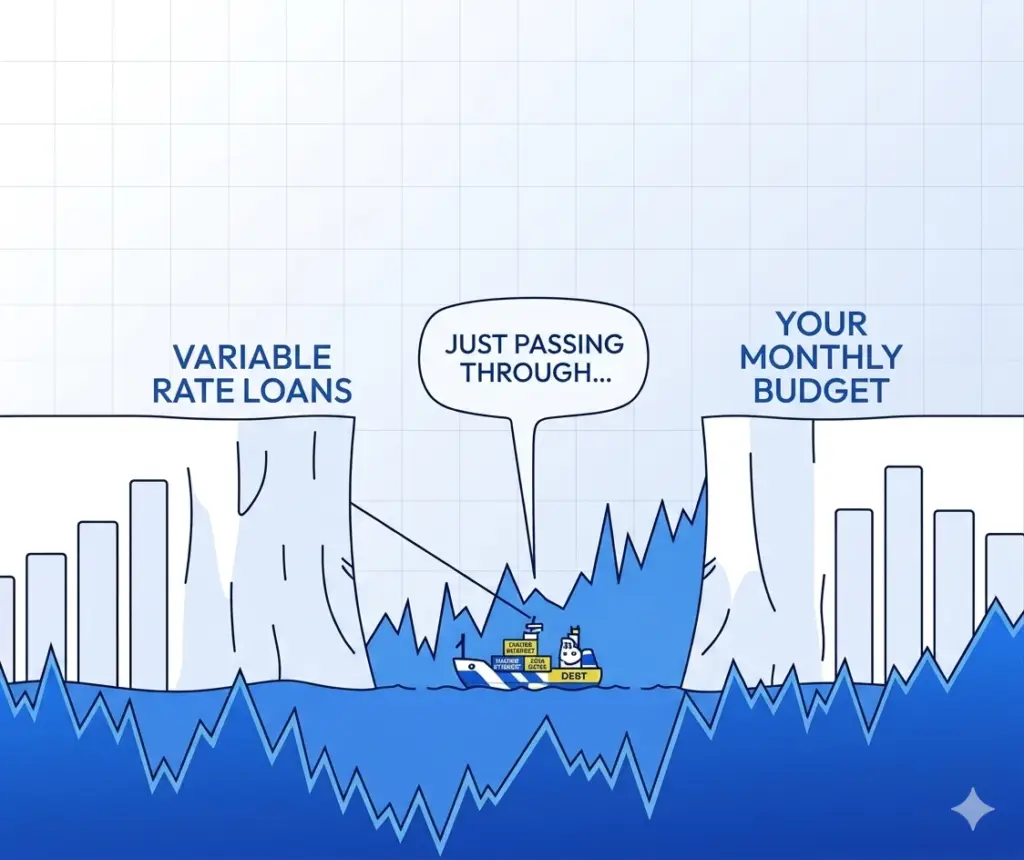
The Mortgage “Sting”: If you own a home with a £200,000 mortgage, the impact can be profound. Many households are still on standard variable rates or are renewing fixed-rate terms. Because rates are “higher-for-longer,” this mortgage is now costing you approximately £150 more per month than it would have at a lower rate. Ultimately, this is £1,800 a year that you are unable to save or invest for your future.
Conclusion: Escaping the Debt Hamster Wheel
Therefore, when interest rates stay high, debt ceases to be a convenient financial tool and becomes a serious liability. Itacts as a “leaky pipe” in your financial house, dripping money away from your bank account and directly toward bank profits. If you allow high-interest debt to continue, you may find yourself struggling merely to pay the interest, unable to make real progress on the debt itself.